The Creative Buddhist Newsletter͏‌ ͏‌ ͏‌ ͏‌ ͏‌ ͏‌ ͏‌ ͏‌ ͏‌ ͏‌ ͏‌ ͏‌ ͏‌ ͏‌ ͏‌ ͏‌ ͏‌ ͏‌ ͏‌ ͏‌ ͏‌ ͏‌ ͏‌ ͏‌ ͏‌ ͏‌ ͏‌ ͏‌ ͏‌ ͏‌ ͏‌ ͏‌ ͏‌ ͏‌ ͏‌ ͏‌ ͏‌ ͏‌ ͏‌ ͏‌ ͏‌ ͏‌ ͏‌ ͏‌ ͏‌ ͏‌ ͏‌ ͏‌ ͏‌ ͏‌ ͏‌ ͏‌ ͏‌ ͏‌ ͏‌ ͏‌ ͏‌ ͏‌ ͏‌ ͏‌ ͏‌ ͏‌ ͏‌ ͏‌ ͏‌ ͏‌ ͏‌ ͏‌ ͏‌ ͏‌ ͏‌ ͏‌ ͏‌ ͏‌ ͏‌ ͏‌ ͏‌ ͏‌ ͏‌ ͏‌ ͏‌ ͏‌ ͏‌ ͏‌ ͏‌ ͏‌ ͏‌ ͏‌ ͏‌ ͏‌ ͏‌ ͏‌ ͏‌ ͏‌ ͏‌ ͏‌ ͏‌ ͏‌ ͏‌ ͏‌ ͏‌ ͏‌ ͏‌ ͏‌ ͏‌ ͏‌ ͏‌ ͏‌ ͏‌ ͏‌ ͏‌ ͏‌ ͏‌ ͏‌ ͏‌ ͏‌ ͏‌ ͏‌ ͏‌ ͏‌ ͏‌ ͏‌ ͏‌ ͏‌ ͏‌ ͏‌ ͏‌ ͏‌ ͏‌ ͏‌ ͏‌ ͏‌ ͏‌ ͏‌ ͏‌ ͏‌ ͏‌ ͏‌ ͏‌ ͏‌ ͏‌ ͏‌ ͏‌ ͏‌ ͏‌ ͏‌ ͏‌ ͏‌ ͏‌ ͏‌ ͏‌ ͏‌ ͏‌ ͏‌ ͏‌ ͏‌ ͏‌ ͏‌ ͏‌ ͏‌ ͏‌ ͏‌ ͏‌ ͏‌ ͏‌ ͏‌ ͏‌ ͏‌ ͏‌ ͏‌ ͏‌ ͏‌ ͏‌ ͏‌ ͏‌ ͏‌ ͏‌ ͏‌ ͏‌ ͏‌ ͏‌ ͏‌ ͏‌ ͏‌ ͏‌ ͏‌ ͏‌ ͏‌ ͏‌ ͏‌ ͏‌ ͏‌ ͏‌ ͏‌ ͏‌ ͏‌ ͏‌ ͏‌ ͏‌ ͏‌ ͏‌ ͏‌ ͏‌ ͏‌ ͏‌ ͏‌ ͏‌ ͏‌ ͏‌ ͏‌ ͏‌ ͏‌ ͏‌ ͏‌ ͏‌ ͏‌ ͏‌ ͏‌ ͏‌ ͏‌ ͏‌ ͏‌ ͏‌ ͏‌ ͏‌ ͏‌ ͏‌ ͏‌ ͏‌ ͏‌ ͏‌ ͏‌ ͏‌ ͏‌ ͏‌ ͏‌ ͏‌ ͏‌ ͏‌ ͏‌ ͏‌ ͏‌ ͏‌ ͏‌ ͏‌ ͏‌ ͏‌ ͏‌ ͏‌ ͏‌ ͏‌ ͏‌ ͏‌ ͏‌ ͏‌ 
Red Ladder Studio
 

THE CREATIVE BUDDHIST NEWSLETTER


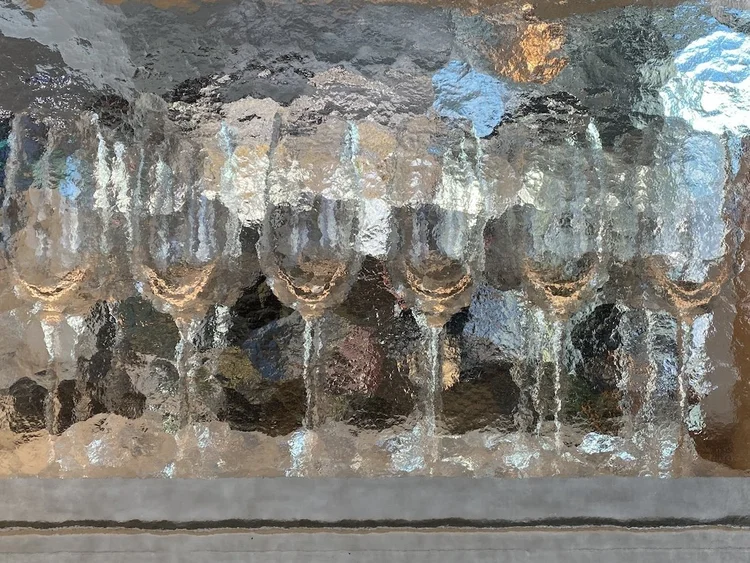
Bright and frosty, cafe window

Dear Subscriber First Name,

I confess: I am a serial experimenter. But it turns out to be a much better “diagnosis” than my old belief that I was someone who could never stick with anything. I love trying new things—ways of eating, ways of working, even moving the sofa to the other side of the room.

For a long time, though, I felt there was this unspoken expectation that I had to stick with whatever I started. If I moved the sofa back, it felt like admitting failure, like the whole thing had been a waste of time. But now, with my new diagnosis, I feel liberated: experimenters don’t have to keep up the experiment once the trial is over. That’s the whole point—we try, learn, and move on.

Which brings me to my latest experiment: For the whole of January, I’m dealing with the newsletters I receive in one of two ways—respond or unsubscribe.

Here’s how it works: first, all newsletters go into a folder. At least once a week, I go through the folder and decide either to:

  • Write back. I tell the sender why I’m on their mailing list and what I appreciate about their newsletters.

  • Or unsubscribe.

Why this experiment? Three reasons:

  1. To weed out the newsletters I don’t really value, so I have more time to enjoy the ones I do.

  2. To build the habit of seeing the people behind the newsletters as real individuals—people I could actually have a two-way connection with.

  3. To express more gratitude, especially to people I don’t meet in person. (This extends to authors and artists who inspire me—I’m planning to write more fan letters!)

The results after one week:
I unsubscribed from most of the newsletters I was receiving because I couldn’t, hand on heart, really say I really valued them. Then I started writing to the ones I did appreciate. The responses so far have been mind blowing.

One person asked if they could use what I wrote as a testimonial on their website. Two others both said I’d made their day. I tried to be specific and honest in my feedback. For example, with one sender, I admitted to not being interested in what she does specifically, but I love her emails because they’re so warm and funny.

And here’s the unexpected part: in the same week, I received a surprising number of appreciative emails about my own newsletter, completely out of the blue. This whole appreciation, gratitude thing really works in a mysterious way. Why not try it? Even if it means unsubscribing to mine!

January’s Dharma Bundle

Wabi-sabi Dharma: 
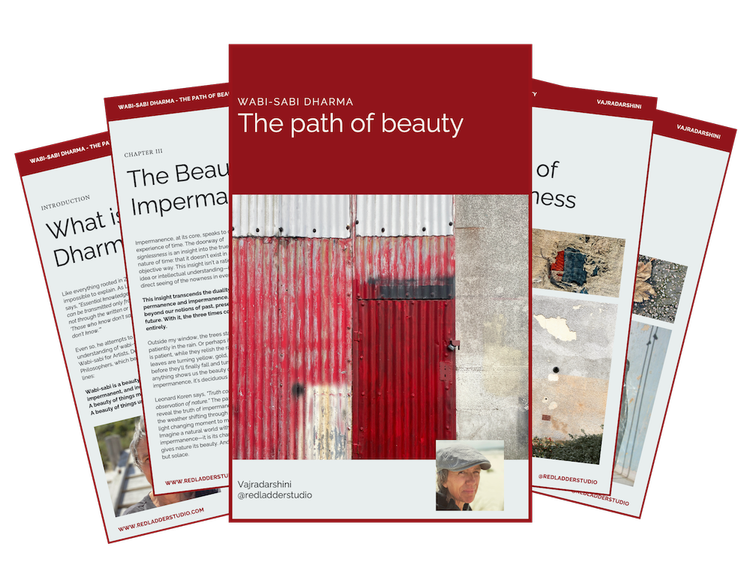
the path of authenticity

‘A mind of winter’ is the wabi-sabi mind. The mind finds beauty in winter. This year don’t wish away the winter, see if you can recognise some of the opportunities it offers! Just like a night without sleep leaves us depleted, so would a year without wintering.

  • Start the year with some creative Dharma. Here’s what you’ll find in January’s bundle; 

    • Illustrated guide: Wabi-sabi Dharma: The Path of Beauty

    • Video or audio: Wabi-sabi Dharma - my personal journey.

    • Photo assignment: Decent—The Beauty Beneath Our Feet.

    • Video or audio: The Three Attitudes of Wabi-Sabi—Living with Authenticity, Compassion, and Freedom.

    • Audio reflection: Bringing a wabi-sabi attitude to practice.

    • Creative Assignment: Creating your own wabi-sabi icons. 

    • Video: Zoom workshop recording, ‘Becoming a Wabi-Sabi Person in 2025.’


The Dharma Bundle is a ‘bundle’ of dharma resources, thoughtfully made and beautifully packaged. Short, illustrated Dharma videos and audio talks. Audio meditations and reflections. Creative assignments. Zoom meetups. Find out more here.

 DHARMA BUNDLE MEMBER SPACE 

On my radar this week

Got a bit obsessed with how things appear behind distorting glass

Podcast - David Whyte:
Over two hours in depth conversation between Tim Ferris and the poet David Whyte. So many great bits, but I loved the section on Zen as a path of heartbreak. Comparing the Zen path to being in a long marriage!

Book - Threads:
Subtitled The Delicate life of John Craske, Threads is Julia Blackburn’s beautifully illustrated search for this elusive artist and fisherman. Becoming ill at a young age, he gives up sea fishing and starts painting the sea instead. Soon too ill to even stand at the easel, he turns to embroidery, which he can do in bed. Stitching delicate ships in rough seas. The author travels Norfolk and Suffolk looking for clues to Craske’s life and finding many other stories along the way.

TV - Cunk on Life:
It’s not exactly good clean fun but if your kids are over 18 Cunk on Life is great family viewing. I literally had tears rolling down my face for an entire hour. It’s bonkers, but who doesn’t need a bit of bonkers fun in the depth of winter? And even The Guardian gave it four stars!

Podcast - The Dopamine Expert:
I listened to Steven Bartlett’s interview with Dr Anna Lembke, The Dopamine Expert. Then suggested that me and my wife watch it together on YouTube. Dopamine is one of those terms that you hear all the time, but if you are like me, you perhaps haven’t understood the part it’s playing in our increasing addiction to fleeting distracting pleasures that get us nowhere. Especially essential watching for anyone with kids.

Book - Tiny Experiments:
Tiny Experiments is not out yet, but available for pre-order. I’m sold just on the title! It inspired me to realise that I am a serial experimenter and that is no bad thing. I’ve been following Anne-Laure Le Cunff’s newsletter for a while and won’t be unsubscribing. A treat for curious minds.

Diary extracts:

… like I said, obsessed!

Integrating my inner housewife


I’ve been reading a bit about feng shui lately. It’s the study of how energy interacts with our environment—where it flows freely in our homes and where it gets stuck or stagnates.

Feng shui has its roots in China, just like qigong, which focuses on the flow of energy within us—through our body and mind.

I love discovering connections between the things I’m passionate about, so I was chuffed to come across the three pillars of feng shui:

  1. Everything is alive.

  2. Everything is connected.

  3. Everything is changing.

Can you guess the connection I’m about to make?

These pillars map nicely onto Rigdzin Shikpo’s teaching of the three ever-present qualities of mind: openness, clarity, and sensitivity. And these qualities, in turn, connect to the vimoksha mukkhas—the doorways to freedom.

  • Everything is alive relates to sensitivity and the vimoksha of wishlessness: the experience of being fully present with whatever is alive in us right now, deeply sensitive to what’s happening.

  • Everything is connected resonates with the quality of openness and the vimoksha of emptiness. When we tune into openness, we see that everything is empty of divisions. Without divisions, everything is naturally interconnected.

  • Everything is changing reflects clarity and the vimoksha of signlessness. Though it is rather counter intuitive, when we stop pinning things down, labelling them and defining them they become clearer and more vivid.

This realisation opens up an exciting new thread for me: working with my home can also be a way of working with the lakshanas and vimokshas, and with openness, clarity, and sensitivity. So exciting, another way to integrate my inner housewife into my spiritual life!


The rejection challenge


In the Creative Co-working Community, some of us have taken on a rejection challenge. The idea was inspired by several sources, including a podcast titled How to Use Rejection to Grow Your Business. It’s a simple yet powerful concept: instead of avoiding rejection, you actively seek it out.

To collect rejections, you have to ask for things you want but believe are unlikely to happen. For example, you might reach out to someone you admire and propose collaborating on a project. You could write an article and pitch it to your dream publications. On a more personal level, you might invite someone you’d like to know better for coffee. Or, as I’m doing with my newsletter experiment, you might send a message not knowing whether you’ll get a reply.

The goal is to rewire that part of your brain that’s afraid of rejection. Think about all the risks you’ve avoided simply because of the fear of hearing "no". But when you’re collecting rejections, there’s no downside—it’s a win-win situation. Either you get a "yes", or you get a "no", which still counts as a win because you are collecting rejections.

In the end, I’m confident we’ll end up with more "yeses" than we would have if fear had held us back. After all, the only sure way to miss out is not to ask in the first place!

A quote I’m thinking about:

"Today is only one day in all the days that will ever be. But what will happen in all the other days that ever come can depend on what you do today. It’s been that way all this year. It’s been that way so many times."

- Ernest Hemingway


Sending a whole lot of love your way,
Vajradarshini

P.S. If you haven’t already downloaded your free guide to wabi-sabi dharma you’ll find it here ⬇️

Red Ladder Studio
Unit 50435, PO Box 6945
London, W1A 6US
UK

Unsubscribe

Red Ladder Studio