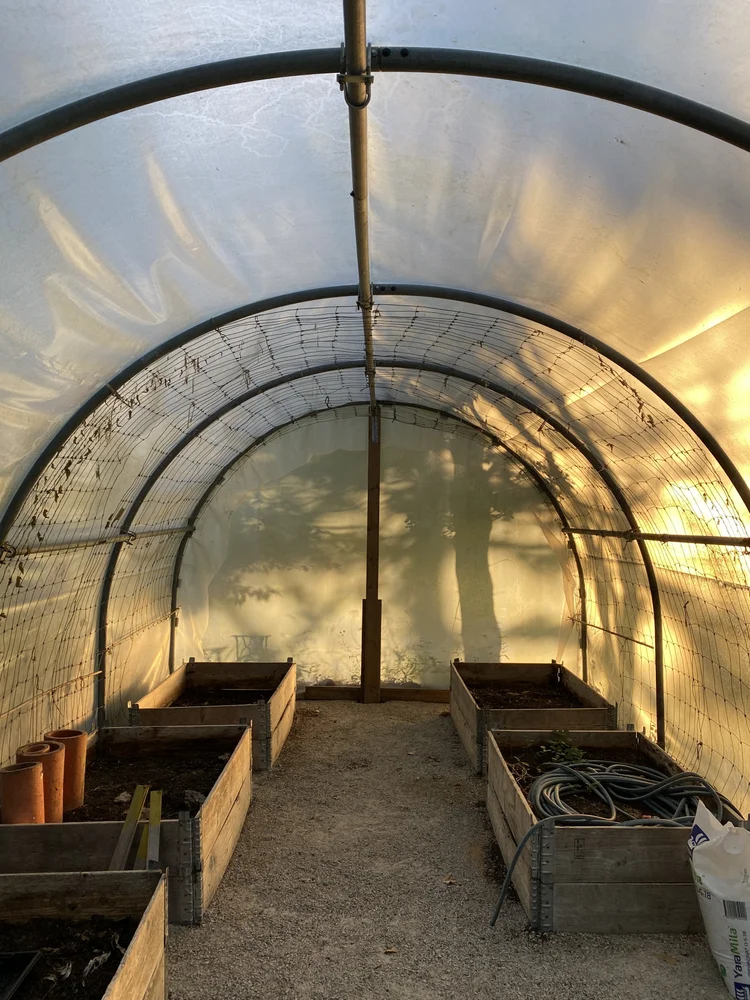
Dear Subscriber First Name,Life at the moment is all about the garden. Our first little working retreat here starts today! One of the main projects is to set up new vegetable beds for next year, using Charles Dowding’s ‘no-dig’ method. We’re about to receive 10 cubic metres—around 12 tons—of compost, so for the past few weeks, gardening has filled my mind, as well as my days. If you’re a gardener, you may have saved your own seeds from time to time. I have, and always thought it was simply a way to be frugal. But I recently discovered there’s much more to it than that, thanks to a podcast interview with Adam Alexander (see On My Radar below). Imagine you grow four varieties of tomatoes, and one stands out as especially good. You might save the seeds and save yourself £1.99. But what if you take it further—choosing the very best plant from that variety, then the very best tomato on that plant, and saving those seeds? You’re selecting not just for taste, but for the plant’s ability to thrive in your garden. Next year, you sow those seeds, again observe which plant performs best, and save from that one. Over time, you’re cultivating tomatoes uniquely suited to your soil, your microclimate, your way of tending them. It’s what plant breeders do—but here, you’re breeding a plant to belong, intimately, to your garden. And we’re no different. We, too, can become better adapted to our inner and outer conditions—if we’re willing to learn from experience… READ THE FULL ARTICLE ⬇️
|