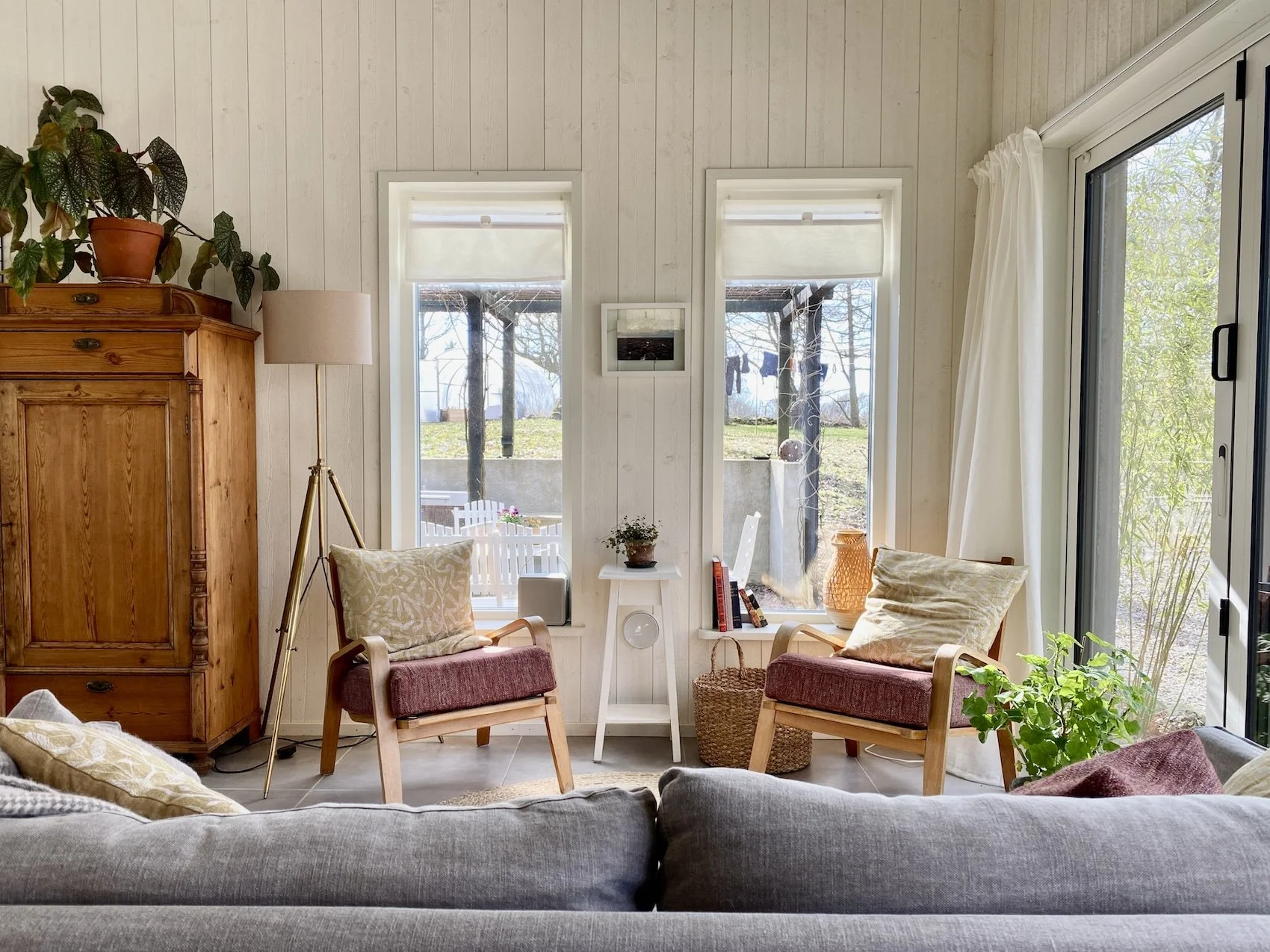
Rent our Guesthouse for a solitary retreat and we’ll be on hand if you need support.
I've just been leading a retreat, not a solitary but with 22 other people. During the teachings and over dinner, I kept finding myself telling stories from solitary retreats, some of them decades old. What happens on a solitary really stays with you.
One story goes back to when I was a very young woman, new to Buddhism. On a solitary retreat, I set up my shrine the way I thought you were supposed to: an image of the Buddha, flowers, candles, incense. I closed my eyes to meditate, and after a while I opened them, looked at the shrine, and the phrase that came to mind was, "This is not my tradition." At that moment, the whole shrine collapsed on me.
It had been built on shelves held up by little brackets. There I sat, soaking wet from the flower vases, covered in sand from the incense bowls, and luckily the candles had put themselves out as they fell. I sat there shaking, feeling as if I'd drawn down the wrath of God.
I couldn't set up the shrine the same way, so I looked to the mantelpiece over the fire. That was where my grandparents' shrine would have been, where they kept their precious things: the photographs and objects closest to their hearts. I did the same. I put out my favourite things, a small Buddha rupa and some images that were meaningful to me, and lit candles above the hearth. That became my new shrine.
I remember this story to this day because I realised that this was not my tradition. Not Buddhism, not India, not Tibet, not even Japan, but something that runs through all of them: the essential Dharma. Essential Dharma is my religion, and I have to find a way of manifesting that in my life, whether through shrines, rituals, routines or practices.
That story got me thinking about how much a solitary can reveal, so here are some of the discoveries I've made.
Everything carries more meaning
Everyday life offers us moments when the veil is drawn back on another perspective, but on a solitary retreat there's more time for those moments to land. Once, walking along a road, I saw something in the distance and thought I knew what it was. I took it to be a branch at the side of the road, but as I got closer, what I was seeing no longer matched my idea of it. I could watch my mind turn it into something else, because it couldn't bear not knowing. I'd probably never watch my mind in such detail in everyday life.
Another time, while meditating, a very strong image of my grandfather came to mind, so strong that I thought he might have died. I had no phone, and I realised there was no way of knowing whether he was alive, or whether anyone was, and that it didn't really matter, because my relationship with him still existed. My love for him didn't depend on whether he was alive or dead. It's hard to explain, but I felt I'd had an insight I can't put into words, and I don't think it would have happened amid the busyness of everyday life.
That's what the time gives us: the chance to sit with something long enough to go deeper and notice more. Everything carries more meaning on a solitary, and perhaps that's why these stories have stayed with me.
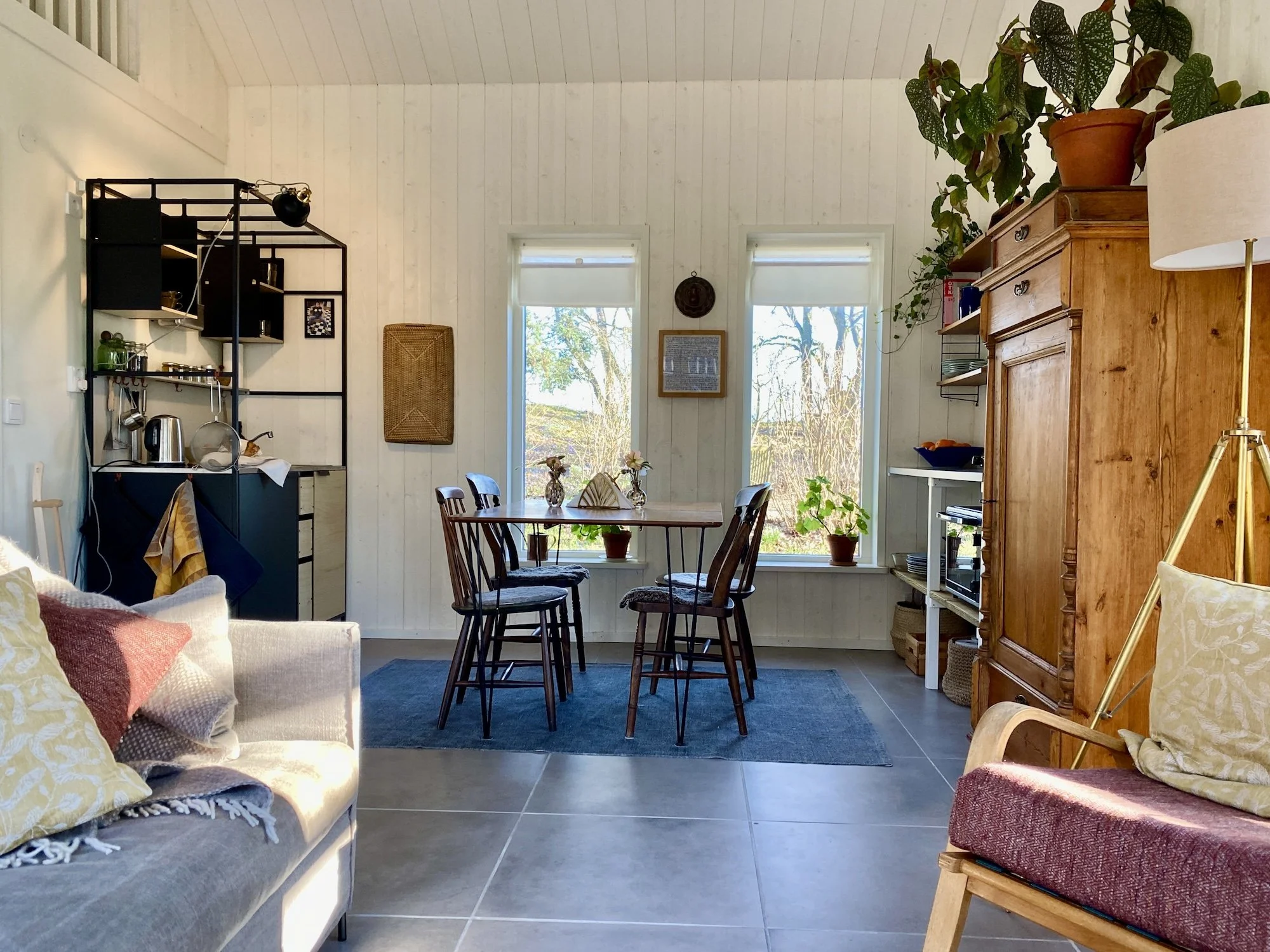
Book a fully catered solitary and have a basket of food delivered each day. You’ll receive one main meal, a lighter meal, homemade bread, fruit and occasional treats. The guesthouse will be stocked with breakfast food and snacks.
You don't need to do anything special
Every time I've had a solitary, I've spent a lot of time planning it, and my plans go in one of two directions. In the first, I'm in solitary retreat ambitions mode: I'll make the most of this time and do everything I never get to, with a daily programme of meditation, reading, exercise and creative projects. In the second, equally ambitious, I plan to do nothing at all: no reading, no projects, just being.
What I've learnt is that it doesn't really matter. The point is to be on your own, and that will have its own effect. You might spend the whole time not really getting down to anything, and yet not be doing nothing either.
I remember one solitary that felt like a complete waste of time: ordinary, boring, nothing. When I came home and people asked how it had been, I said, "Oh, it was nothing, really." Yet within a few weeks I had changed my whole life. Something had happened. I don't know what, and I don't need to. I just trust that being alone has an effect.
“I have been fortunate enough to see many beautiful things in my life. I have experienced the splendour of Mount Kanchenjunga and the vista of Himalayas. I’ve entered the cool and tranquil perfection of Alhambra. I have viewed many of Monet’s finest paintings, and visited his natural masterpiece, the riot of life and colour of his garden at Giverny.
However probably the most beautiful things I’ve ever seen were a couple of margarine tubs in the kitchen of an old Welsh cottage after a particularly good meditation on a solitary retreat in the 1980s. It is the mind that transmutes the base metal of experience into gold and gold into base metal.”
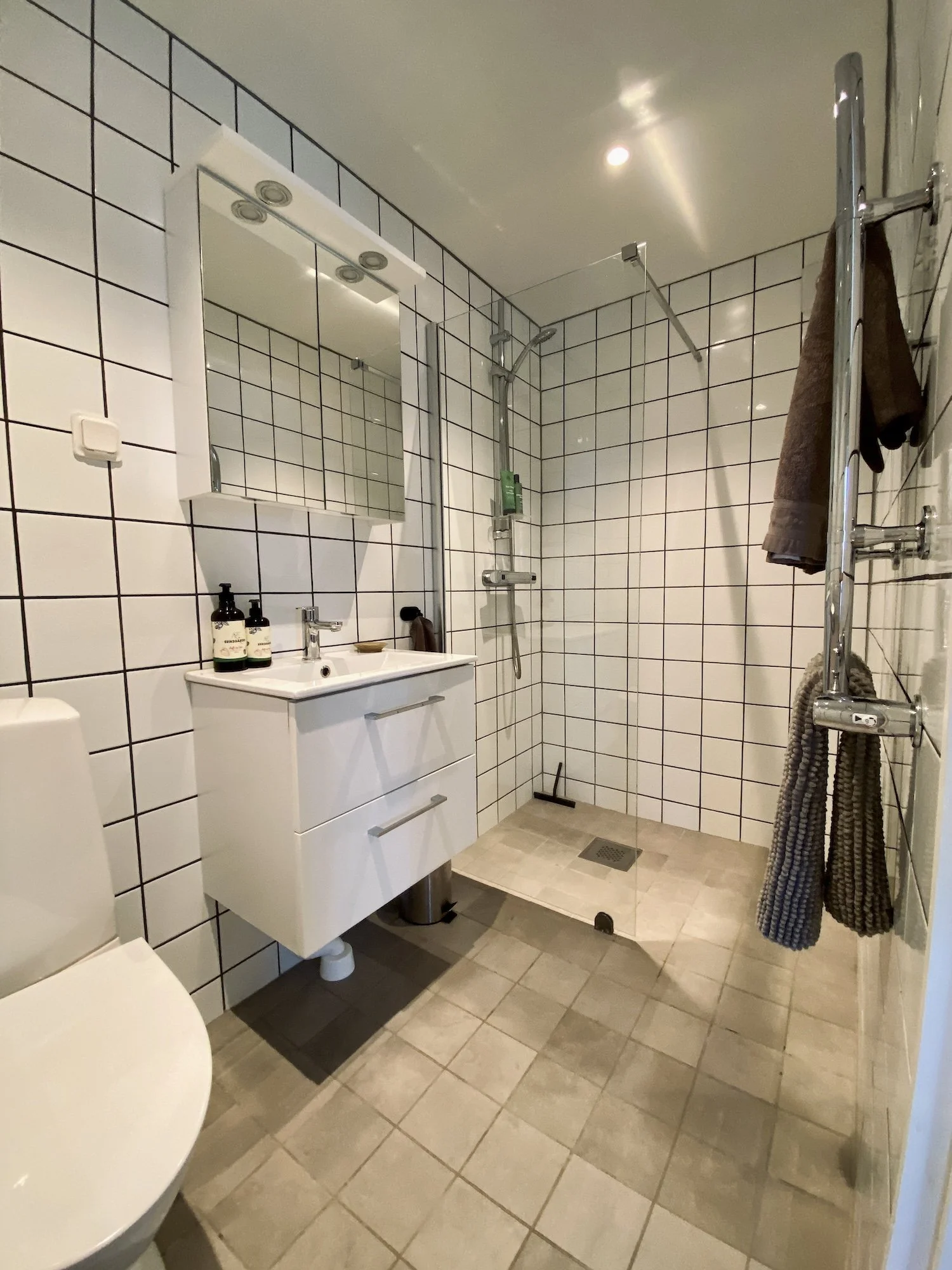
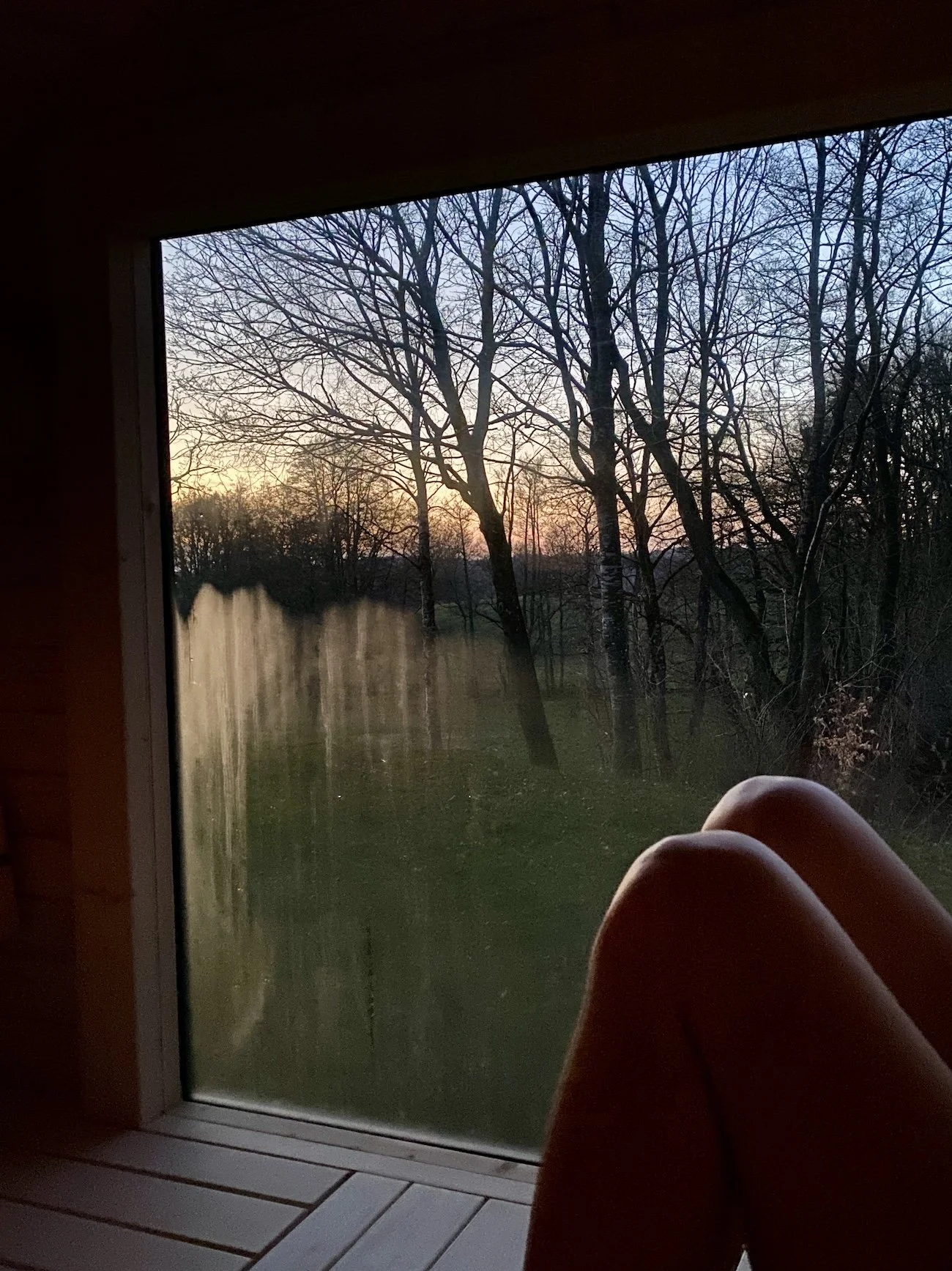
Coming in the winter? Enjoy underfloor heating throughout the guesthouse and make use of the woodfired sauna in the garden.
You are no longer located in calendar time
In everyday life, we feel located in calendar time. I'm in November 2026. Buying a little house in the UK in 2019, and the neighbours next door, Mary and Dave, feels like a long time ago. So does being a teenager on holiday in the Orkney Islands, listening to David Bowie's new album, The Man Who Sold the World, over and over: one foot in a new world of depth, meaning and art, the other in my family life, still seen as a child. I'm stuck in calendar time.
On a solitary, the years and phases of our lives are no longer stacked end to end like the carriages of a long train. They're stacked one upon another like the floors of a tall building. I'm in the lift, going up and down to different points in my life, and they all seem current, equally real, equally vivid. Another image is an accordion, with all the years concertinaed up close together. Nothing ties you to a particular hour, day, month or year.
I don't think I've ever talked about this with anyone, and I don't know if it's other people's experience. Maybe you can let me know. I wonder if it's like this when you're dying, or close to death: that all your so-called memories are as real as the so-called present.
On solitary, you are not alone
The whole point of a solitary is to be on your own, and the fear, perhaps, is loneliness. My experience is that I feel intimately connected to other people again. Perhaps it's simply having the time to take people in. At home or at work we're with people but not always present. On a solitary, I can bring someone to mind and be fully with them.
Maybe, too, in order to connect with others we first need to connect with ourselves, and a solitary gives us the chance. When we connect with ourselves, we connect with all things. We don't need to connect with each person, object or experience individually. We need to be in a state of connection, a state of openness, and then we're connected to everything and everyone.
And just as we're no longer tied to calendar time, we're no longer tied to location. Nobody is physically with us, so everybody is equally distant, which also means equally close. Anyone who comes to mind is there with us, whether they're dead or alive, whether we saw them last week or years ago. So on a solitary you are far from alone. You may even be more connected to others than usual.
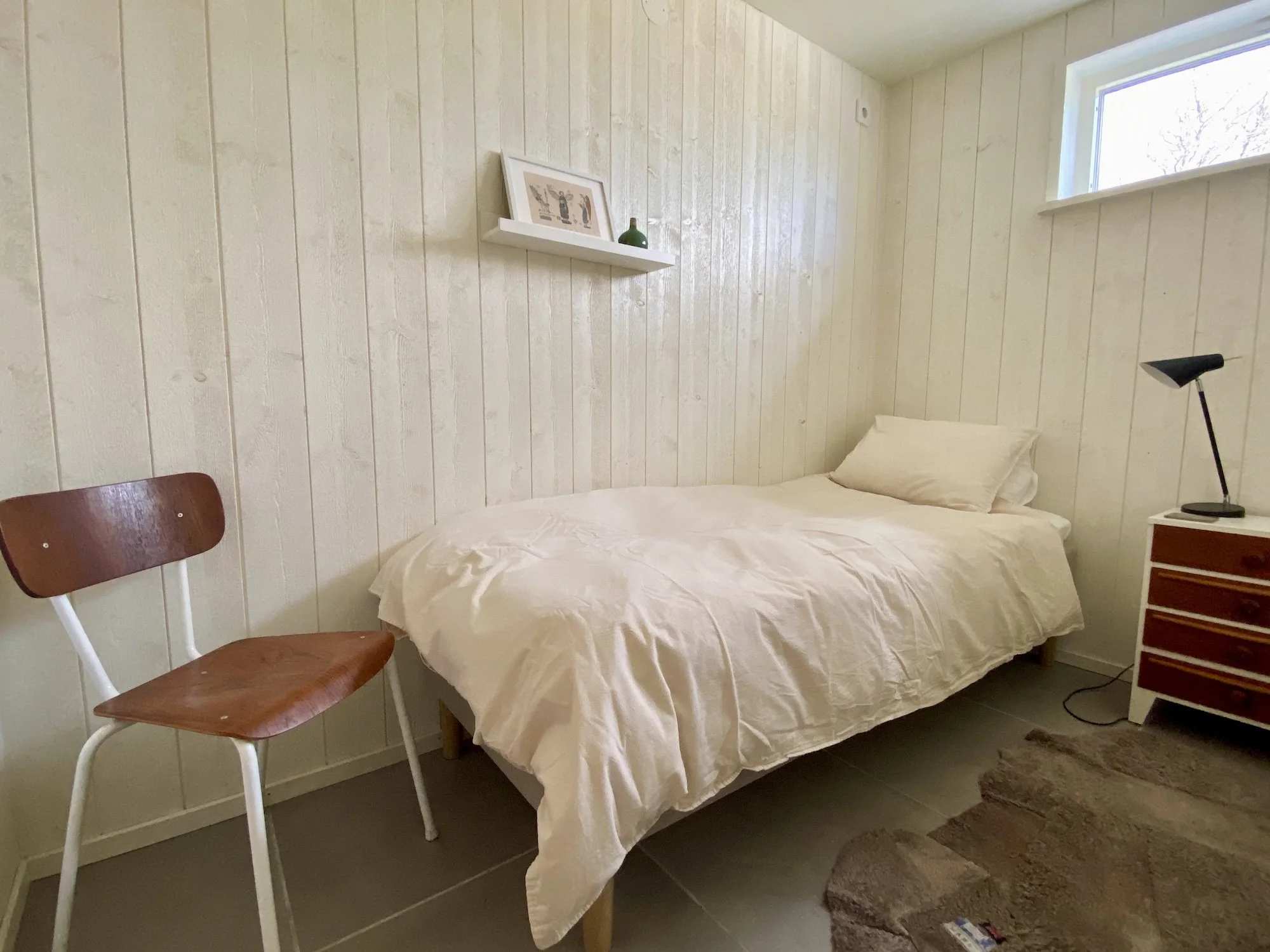
It’s possible to arrange practice reviews during retreat. You can also use our Dharma and arts library.
After a solitary, you'll know what you think
How many opinions do we hear each day, from podcasts, the news, our partner, our friends? With so many voices, it can be hard to know what we really think ourselves.
On a solitary, it's as if the volume on all those opinions is turned down, and we find out. It isn't a conscious process. In a way, it's invisible. If there's an issue in your life you need a new perspective on, try going on a solitary. You don't spend the time thinking about it. It's as if your subconscious, no longer bombarded by other people's opinions and ideas, can feel its way to what you really think and believe.
When you leave, without having consciously looked for an answer, you may find, perhaps sometime later, a new clarity. A decision has been made, a direction settled upon, without you having to do anything at all.
Solitary retreat as a preparation for death
A solitary retreat is like a little death. You go alone, you take very little, and there's nothing to do. All the props of the ego are gone.
In Buddhism, when we die we enter the bardo, an intermediate state between this life and the next. A solitary is such a bardo. We've literally stepped out of our life and become like a ghost, invisible, with no one reflecting us back. Everything that makes us who we are is gone: our possessions, our roles in family and work, our routines.
I often think that when I die, all I'll have is my own heart-mind. On a solitary, that is essentially all we can take with us, bar a few small possessions. Fear arises, whether of the axe murderer from all those horror films we wish we hadn't watched, or simply of having nothing to do and being alone with our own minds. We fear death for a similar reason: it's an unknown, we go alone, we take nothing, and we have only our heart-mind to rely on.
If you've been wondering what a solitary might do for you, I'd love you to find out. Perhaps now is the time to take the leap.
My own first solitary was in a remote cottage in the woods, with mice running along the ceiling beams. I lasted 24 hours! Yours can be a much kinder start. Come and stay in our guesthouse: we'll have it ready for you with everything you need for a cosy solitary, and we'll be on hand whenever you'd like some support.
Related posts:
Buddhism for hedonists
Practice a radical hospitality