June at the Guesthouse
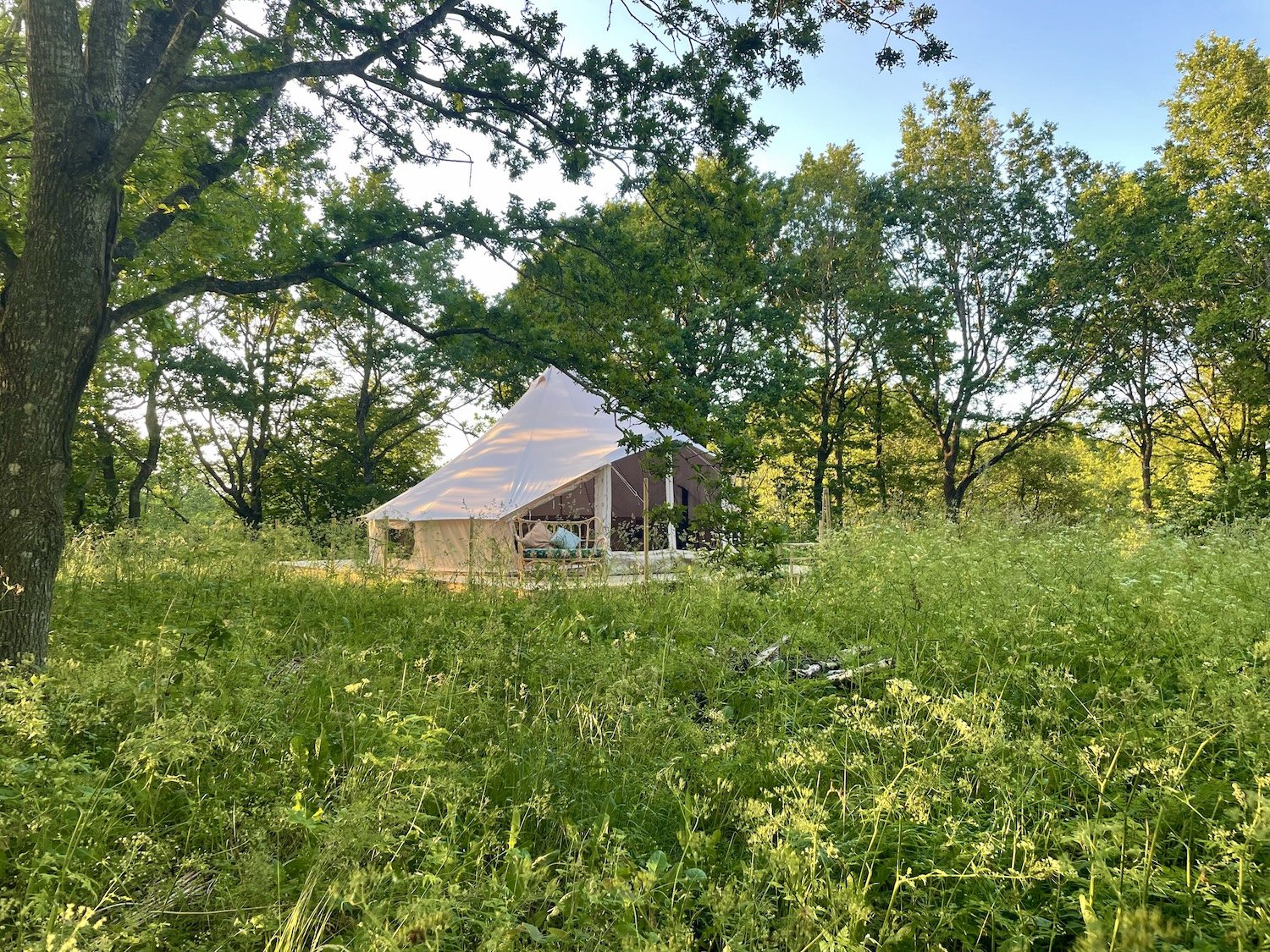
Midsummer meditation tent - photo by Sukhasiddhi
Midsummer retreat
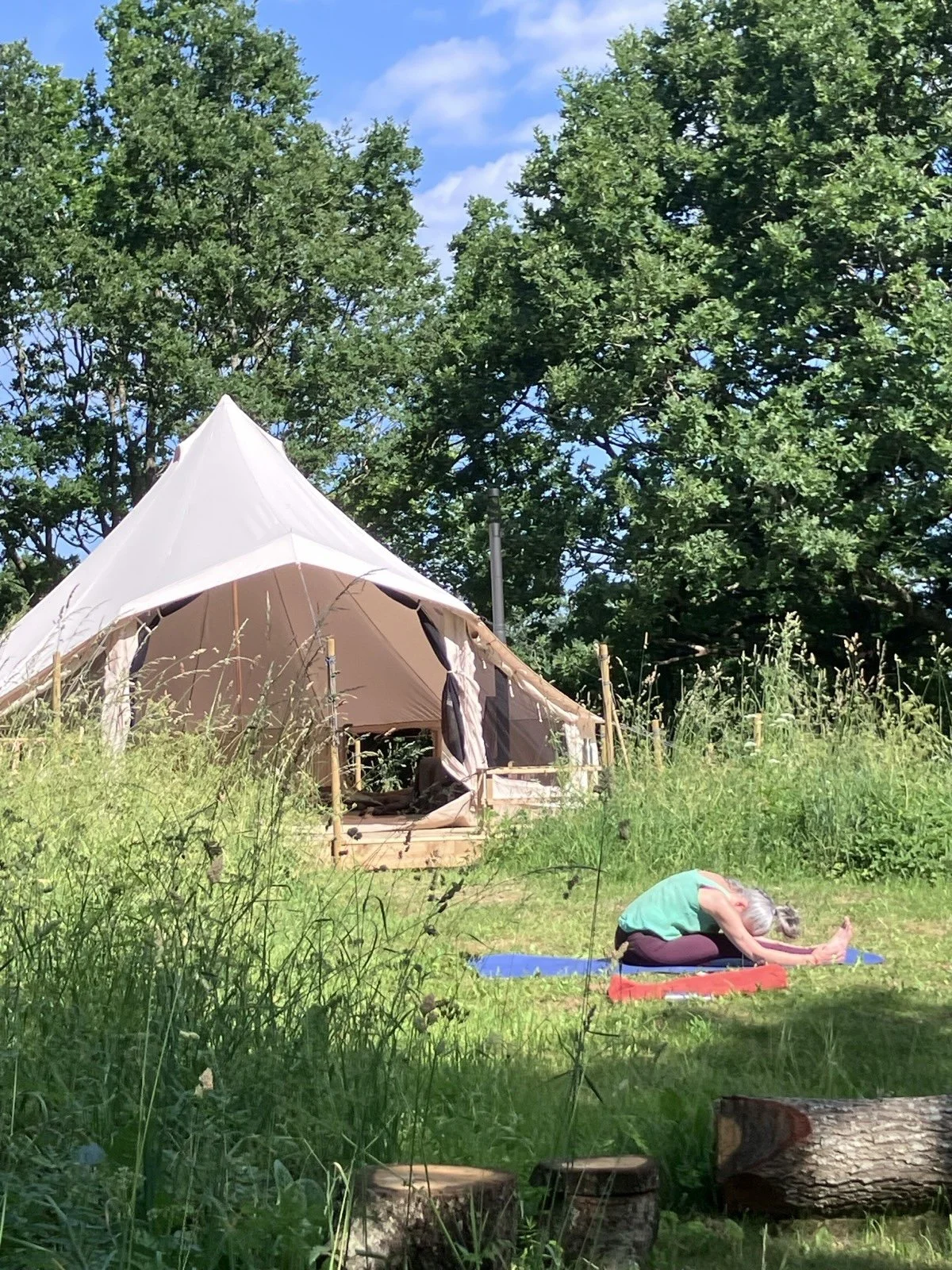
The main event this month was our midsummer retreat. While the UK sweltered through a heatwave, we enjoyed a comfortable 25 degrees or so. We ate all our meals outdoors for nine days — amazing. We're lucky to have lots of large trees, some poplars four or five times the height of the house, so there's always shade somewhere.
The theme was Living with Ease: The Four Noble Truths, which I've written about here - The medicine we keep rediscovering.
With each retreat we get clearer on what we're all about. Primarily deep Dharma, which for us means engaging with the essential teachings but in fresh and creative ways. Plus beauty and nourishment — the qigong, the environment, the food, the pauses and empty spaces are all there to nourish body and mind and allow us to deeply relax. Relaxation is good as an end in itself, but it's only when we relax deeply, when our defences are down, that we really let the Dharma touch and transform us.
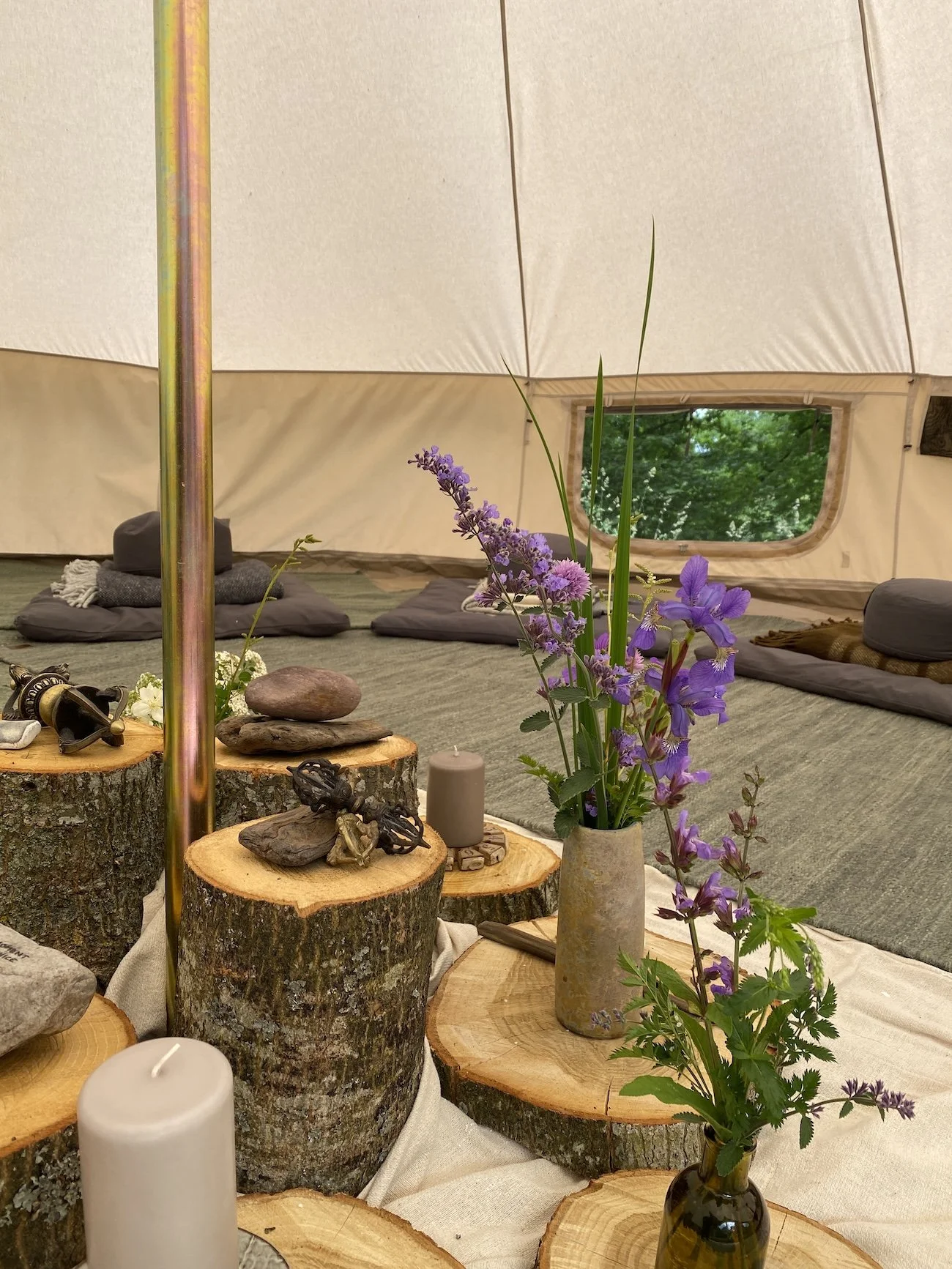
One thing we're still finding our way with is ritual. For a while I'd thought we needed a central image for the shrine, but couldn't envisage a big Buddha sitting there. Then I remembered the original Buddha shrines with just the Buddha's footprints, a dharmachakra carved into the bottom of each sole. For me it's the perfect image: the Buddha was here, was human. He awakened and left us the Dharma — the path to our own awakening. Simple. Yet wonderful. We happened to have a stone carver on the retreat, so we're now in conversation about commissioning this image.
Some eat to live, we live to eat
It's not until you start feeding others that you realise how much food matters to you. Guests on our last retreat were blown away by the food. "Do you always eat like this?" Yes — actually, we do. Food is too big a part of life not to be part of our practice too.
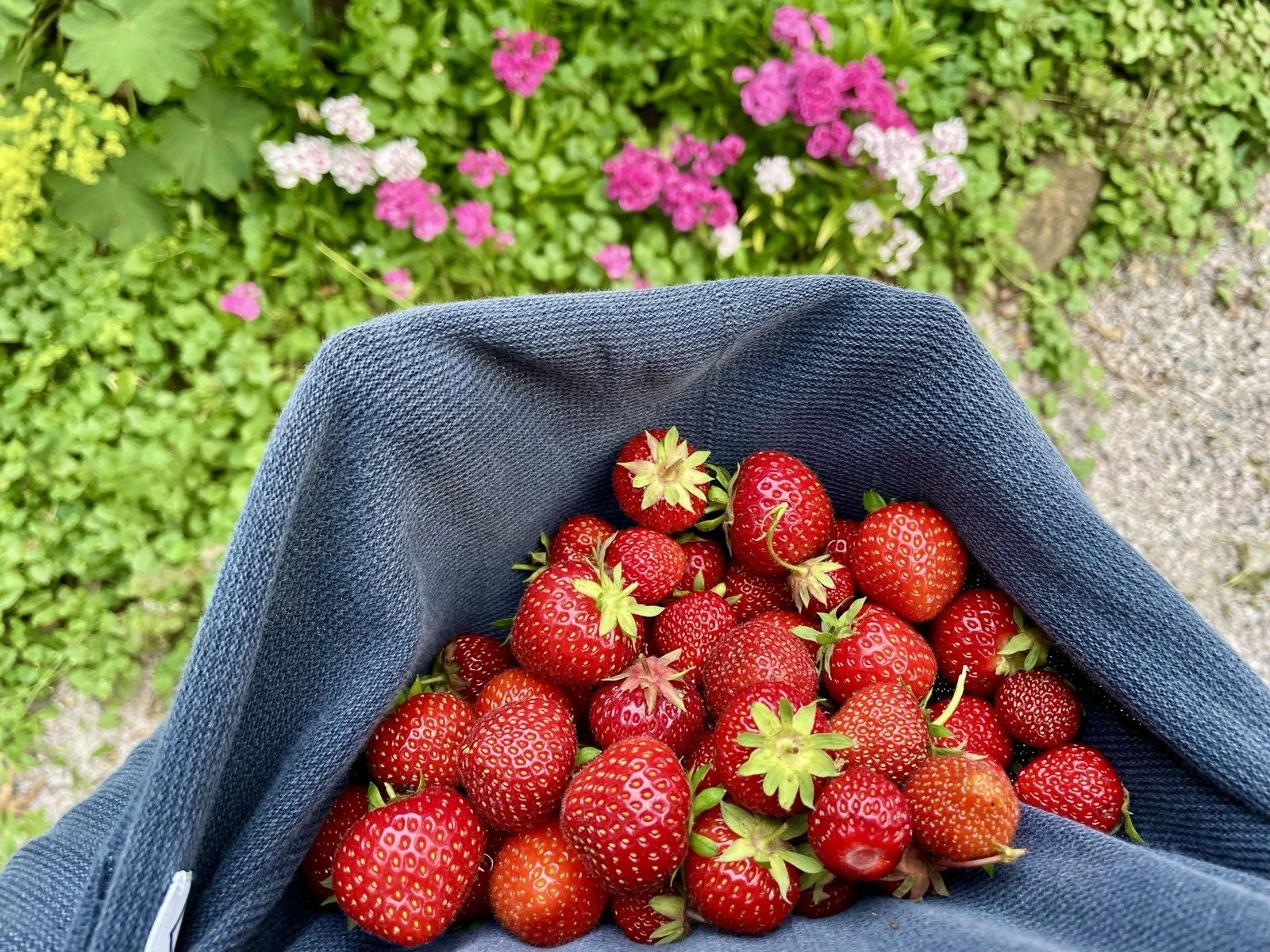
Food is what your body is made of. It shapes how you feel, mentally and physically, and it can bring so much pleasure into your life. Eating a ripe strawberry straight from the garden is indescribable — it grew from the ground like magic, and you're eating the nectar of life itself. Packaged bread, by contrast, is dead.
The fact that living means eating life opens up a whole can of ethical worms. Every choice is an ethical minefield. We're omnivores, and we eat everything — as long as it's had a good life (unlike that supermarket bread). We've started our own fruit and vegetable garden and hope to feed ourselves and our guests from it more and more over time. Beyond that, where possible we try to buy local, organic, or from people we trust.
Whatever ends up on our plate, we try to recognise the sacrifice behind it: the life of a cow at the slaughterhouse, a fawn caught in the wheat harvester, people picking coffee for an unfairly low wage, or the sea of plastic our food so often arrives wrapped in. We try not to look away, but to be grateful instead. Food is energy. Let's resolve to do something good with that energy.
On our retreats, we serve vegetarian food, and can happily arrange good vegan options with a little advance notice.
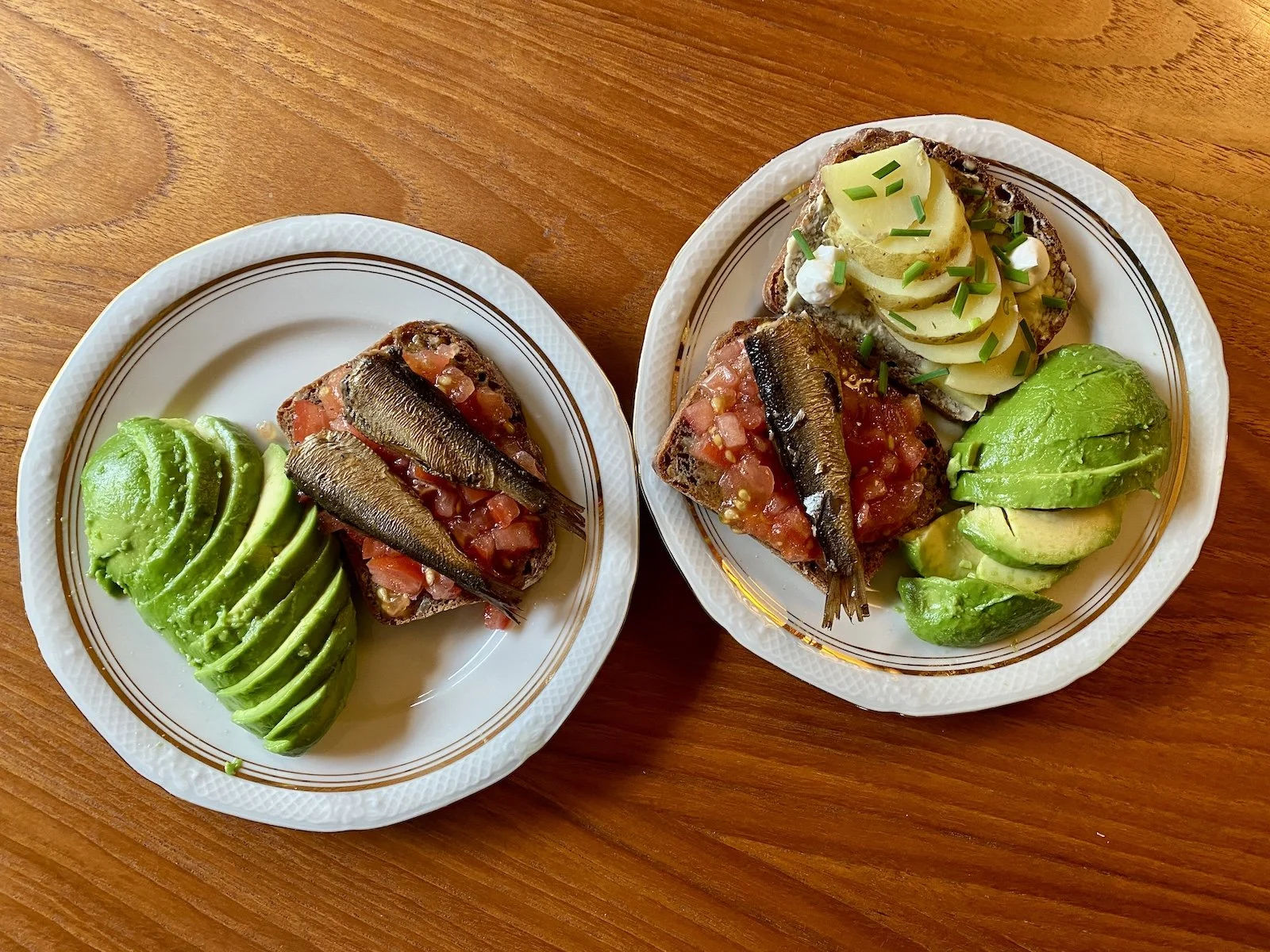
It’s a his and hers brunch!
First Airbnb guests
This month we hosted our first Airbnb guests in The Garden House. We'd had various bits of advice about being clear which parts of the garden were private, and so on. But we didn't want to draw those lines — we're used to sharing this place, and that's what makes us happy. It wants to be enjoyed by as many people as possible.
Our guests loved being here, and we loved seeing them enjoy it: using the outdoor kitchen, picking herbs from the garden, finding their own quiet corners to sit in. There's something about watching someone else fall for a place you love that makes you love it more yourself.
Hospitality is our main practice these days. That means welcoming and taking care of others — but also remembering to welcome all the parts of ourselves, and to take care of every aspect of who we are. I've written elsewhere about what it's like to practice a radical hospitality.
A trip to Wanås for inspiration
Earlier in the month we ditched the to-do list and took ourselves off to Wanås for the day — an art gallery in the middle of a sculpture park.
This time my favourite thing was Isabella Rossellini's "Green Porno": mini insect-porn films, viewed through peepholes hidden in walls and trees, in which Rossellini plays the insect and acts out its sex life. What?! Yes.
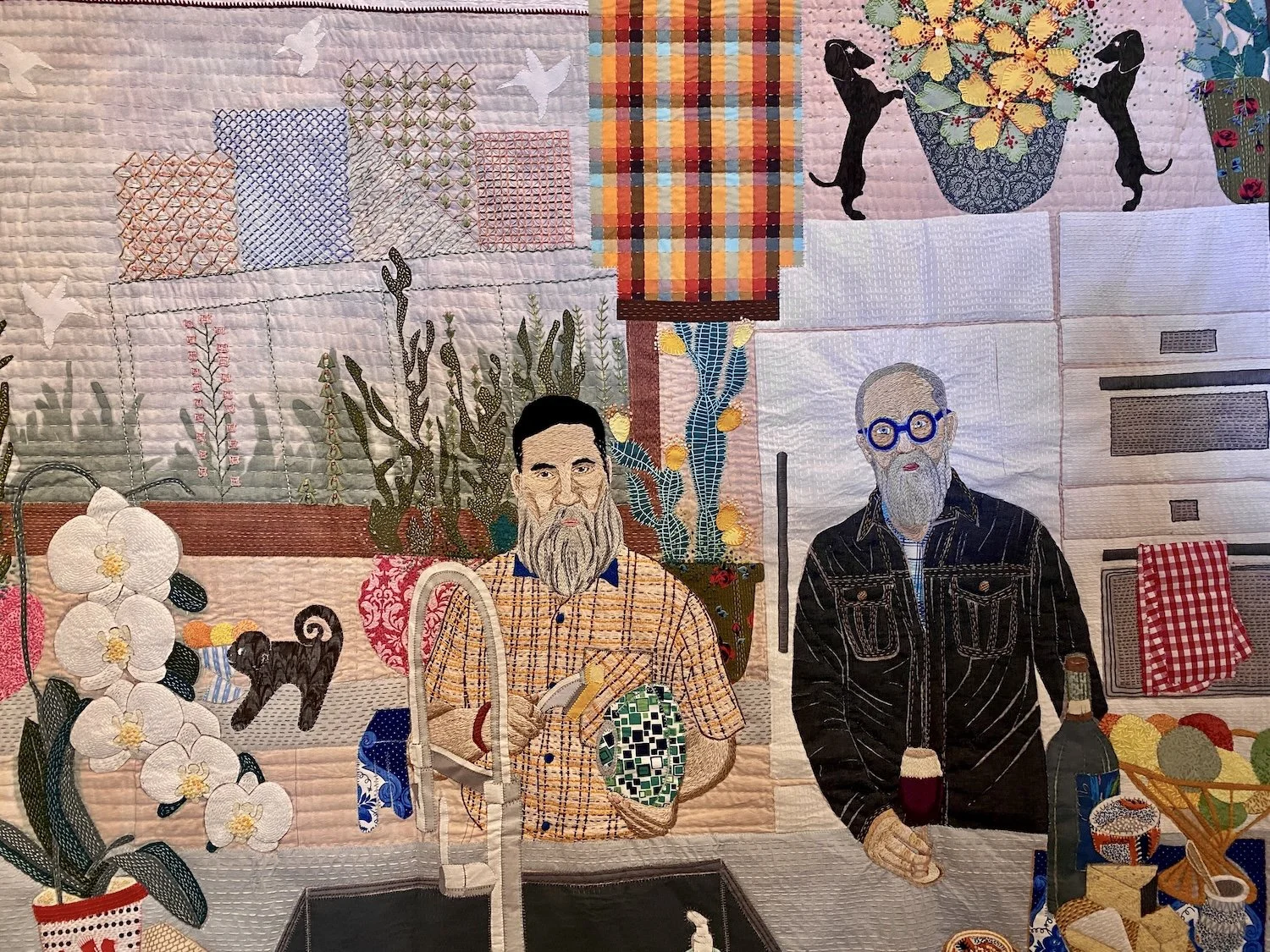
Then there was Chiachio and Giannone's Fortune and Abundance — large-scale paintings made with needle and thread. The ones I loved most were the depictions of their everyday life together: in the kitchen, on the sofa with the dogs. Others showed the colourful lives of LGBTQ people in Argentina. The largest pieces can take up to two years to complete.
Walking around the outdoor sculptures made me think differently about our own place here — how to make more of the space and its little features. Like the stone wall, now hidden within the meadow.
Monthly planning meeting
We made some time to stop and look back over everything we've been doing, and to look ahead to what's next.
It finally feels like there will be space to bring back the Dharma Bundle, which I needed to pause while we made this move. The Dharma Bundle is a bundle of resources I put together each month around a Dharma theme — like a little magazine, but more interactive: videos, led meditations, and creative prompts. By special request, the new Dharma Bundle will include led qigong flows for you to do at home. Dhammasiri has been teaching on our retreats, and people have been asking for videos to take home with them. We're planning the first Dharma Bundle to come out in December.
We'll end the year with an online retreat, The Winter Bardo Retreat. It’s following up on an idea I've had for a long time: to create a retreat with lots of time to reflect on the year that has passed and envision the one to come — an opportunity to notice what has been learned, what has been left behind, and what is emerging, before setting intentions for the future. That's what I want time for in that bardo between Christmas and New Year. It's often also a good time to squeeze in a retreat, so this year we're going to combine the two.
Next year, the main change we'll make is to divide the year into blocks with a single focus — a block of retreats, a block of Airbnb rentals, a block of practical projects, and so on. Partly so we're not mentally changing gear every other week, but also so we spend less time carrying beds from one place to another. You live and learn.
We are also planning a really good rest. I’m looking forward to winter already.
The great outdoors
We’ve been visited by the tawny owls. The first time, we woke to find one sitting on the balcony railing, staring in at us. A great big messy ball of fluff, hardly even owl-shaped. A couple of weeks later, we had two more visits, perhaps from two owls—I think they’re siblings. This time they looked far more owly.
Storks were a feature of the midsummer retreat, as they have a nesting place around here. One morning, while we were doing qigong, four of them were circling overhead. Dhammasiri incorporated a move called Stork Spreads His Feathers into the flow we were doing. I’m not sure they recognised us as fellow storks, though!
Then there are the deer! Unwelcome guests, I’m sad to say. They’re eating Dhammasiri’s vegetables, and the garden now looks like a sculpture park, with lots of weird pokey objects sticking up from the ground in an effort to deter them. They remain undeterred!
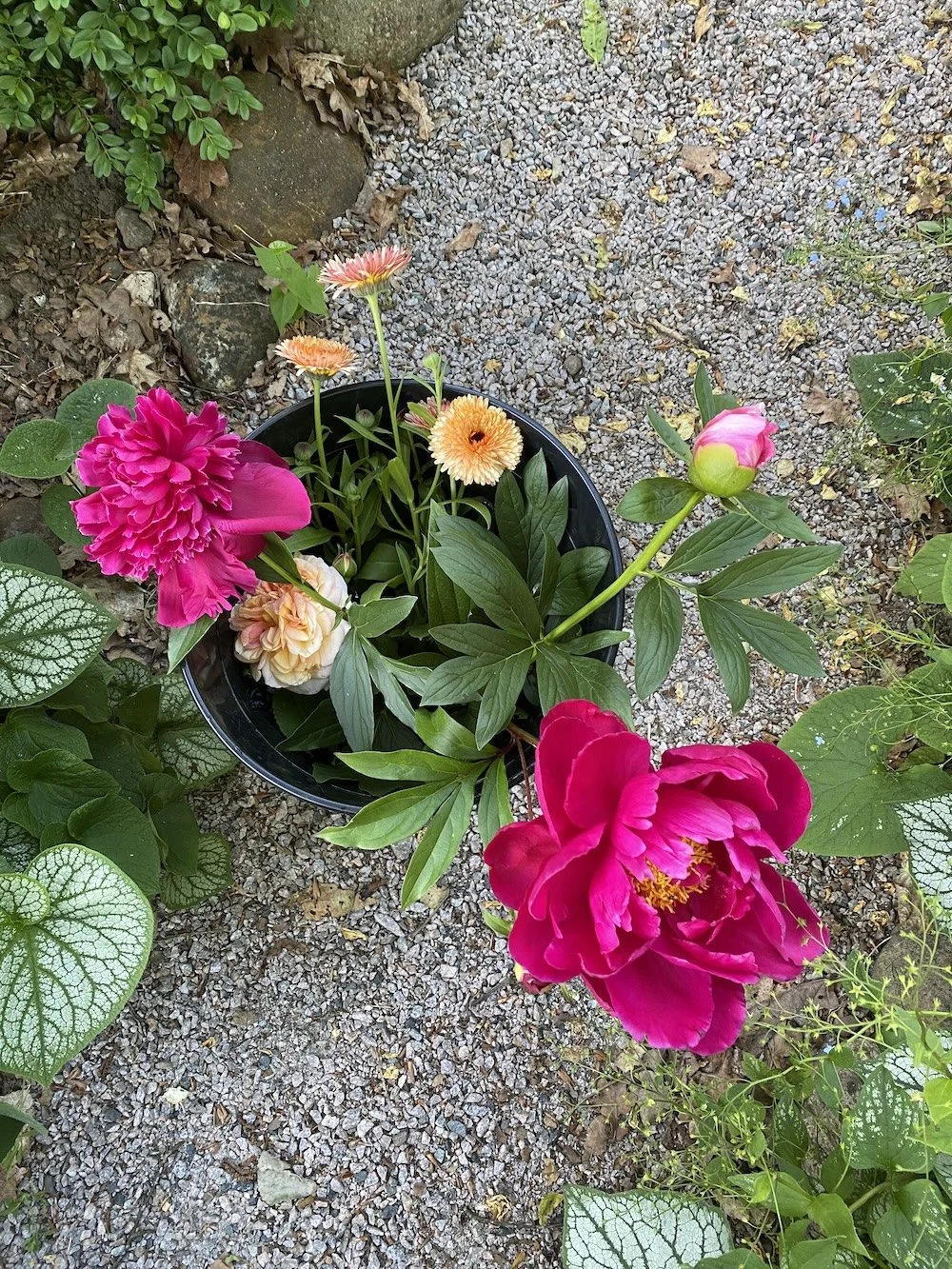
We’re enjoying jumpers full of strawberries and buckets full of peonies and roses. Monty Don, on Gardeners’ World this week, talked about how when you plant a garden, you plant it for someone else. I’ve been feeling very grateful to the woman who planted this garden, and thinking about the people who might be enjoying the gardens I’ve planted over the decades.
Related posts:
May at the Guesthouse
Learning from the garden